Why the Crank Mechanism Makes Bathroom Window Blinds So Easy to Use
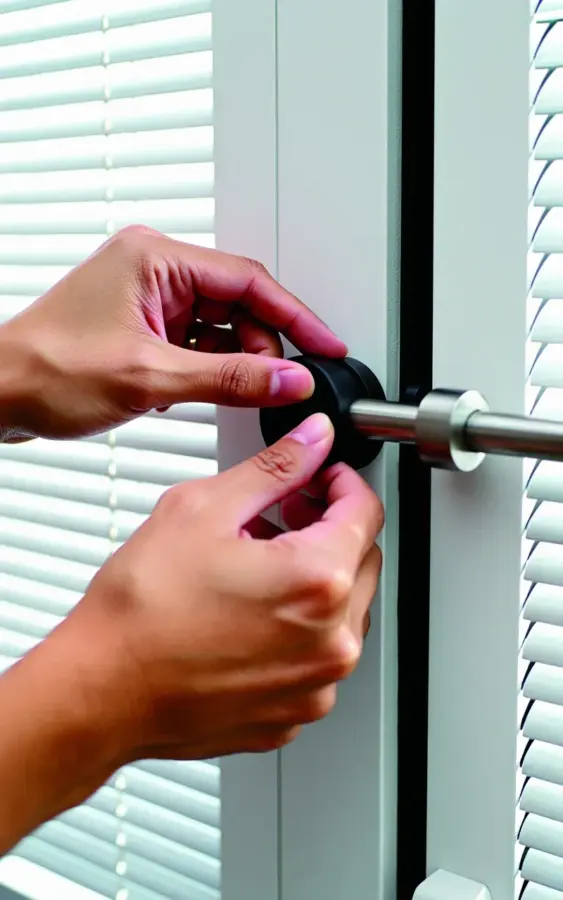
If you have ever wrestled with tangled cords or a stuck wand, you know the frustration. This close up shows exactly how the control mechanism works: a black circular dial mounted on a light gray wall, with a metal rod that turns smoothly in your hand. The white horizontal blinds in the background make it clear that this is a bathroom window blinds setup designed for simplicity. No strings, no fuss, just a twist of the wrist and the slats tilt open or shut. That is the kind of everyday convenience that makes a small bathroom feel less cluttered and more functional.
Wall Mounted Blind Crank: A Space Saving Solution for Tiny Bathrooms
In a compact bathroom, every inch matters. A wall mounted blind crank like the one in the photo keeps the operating hardware off the window frame and away from the sill. That means you can place the control exactly where it is comfortable to reach, even if the window is behind a toilet or above a sink. The black circular control sits flush against the wall, so it does not stick out and get bumped. Plus, the metal rod stays tucked when not in use. It is a practical choice for tight spots where pull cords would dangle into your way.
I have seen too many bathrooms where the cord hangs right beside a faucet or catches on a towel bar. A wall mounted system eliminates that hazard. The control mechanism is deliberately low profile. The hands in the photo are holding it naturally, without stretching or bending. That is the real win for daily use.
White Horizontal Blinds for Bathroom Windows: Why They Work Here
The white horizontal blinds in the background are not an accident. Light colors reflect the bright, even lighting that makes a bathroom feel clean and open. When paired with a simple control mechanism, white blinds let you dial in the exact amount of privacy and brightness. You can tilt them fully shut for a shower, or just crack them open to let in soft natural light while still keeping prying eyes out.
White blinds also hide dust and water spots better than darker finishes, which matters in a humid room. If you choose a moisture resistant material like PVC or aluminum, the slats will not warp or yellow over time. That metal rod turning the mechanism means you are not putting pressure on the slats themselves, so the blinds stay straight and last longer.
How to Adjust Bathroom Blinds with a Metal Rod Control
Using a metal rod control is about as straightforward as it gets. You grip the black circular knob, or the rod itself, and rotate clockwise to close the slats or counterclockwise to open them. In the photo, the hands are showing a gentle twist motion, not a yank or a jerk. That is important because the internal gears are designed for smooth rotation, not force. If you feel resistance, stop and check for an obstruction instead of forcing it.
Here is a quick list of things to keep in mind for smooth operation:
- Always turn the rod slowly and evenly to prevent the mechanism from skipping.
- If the rod feels loose, tighten the set screw on the control hub with a small Allen wrench.
- Lubricate the moving parts once a year with a dry silicone spray, not oil, to avoid attracting dust.
- Keep the area around the wall mount clear of soap scum and hairspray residue.
These small habits keep the control mechanism feeling as smooth as the day you installed it.
Bathroom Window Treatment Ideas Featuring a Crank Style Controller
A crank style controller opens up a few design possibilities that corded blinds do not. Because the mechanism is separate from the window frame, you can mount the blinds inside the window recess for a clean, built in look. Then place the wall mounted dial a few inches to the side, out of sight but easy to reach. This creates a streamlined appearance, perfect for modern bathrooms where you want the window treatment to be unobtrusive.
I have also seen people pair white horizontal blinds with a black circular control as a deliberate contrast, matching it to black faucets or hardware. The photo shows that exact combo: white slats, light gray wall, black knob. It gives the room a collected, intentional feel. If you prefer an even more minimal look, some manufacturers offer the control mechanism in white to blend into the wall completely.
Common Issues with Blind Control Mechanisms and How to Fix Them
Even the best mechanism can act up after years of use. One frequent problem is the metal rod becoming too stiff to turn. That usually means the internal gears need cleaning or lubrication. Another issue is the rod slipping when you turn it, which happens when the set screw loosens over time. In the photo, the rod extends straight out from the black circular hub. If yours angles downward, the bracket may have shifted. Tighten the mounting screws against the wall.
If the blinds do not respond to the control at all, the problem might be the connection inside the headrail. Remove the blind cassette and check that the drive gear is clicking into place. Most residential mechanisms are repairable with basic tools. And if you ever need a replacement part, the standard size for these wall mount cranks is often compatible across brands, so you do not have to buy a whole new set of blinds.
Taking care of the small details, like that black circular control and the metal rod, keeps your bathroom window blinds working well for years. It is one of those upgrades that you notice every single day without thinking about it, which is exactly how good design should feel. If you are looking for a simple way to improve light control in your bathroom, this mechanism is worth saving for your next window treatment project.
Leave a Comment