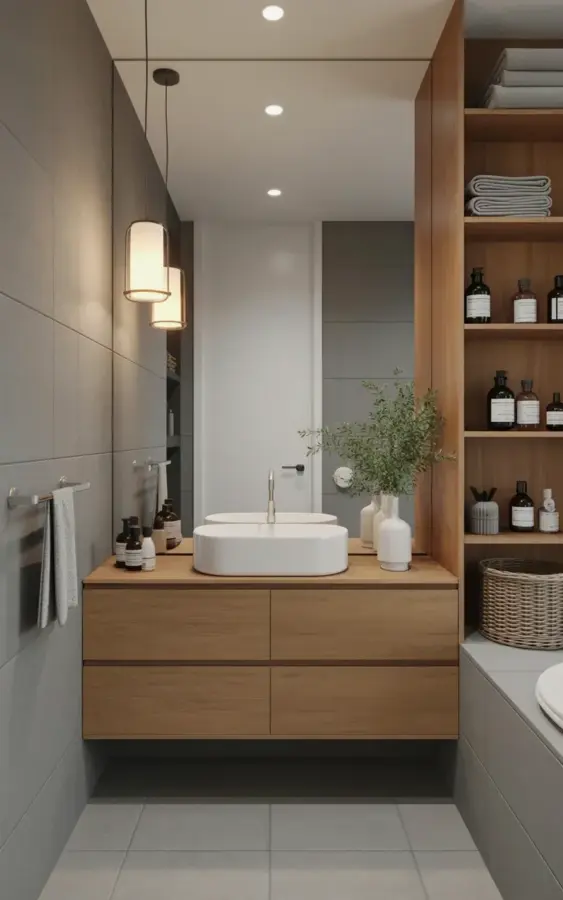
Standing in front of a light oak floating vanity with a slim white oval sink, you might not notice the careful proportions at first. The sink sits just above the drawer fronts, not towering over them, and that small detail is exactly what keeps this modern minimalist bathroom from feeling cramped. The most common mistake people make in a modern minimalist bathroom is picking a vessel sink that is simply too deep for the vanity, turning an airy design into a top-heavy mess. This article walks you through the exact steps to avoid that, using a real example with a floating oak cabinet, large gray tiles, and a row of pendant lights.
Understand the Relationship Between Sink Depth and Vanity Height
Floating vanities already sit higher off the floor than traditional cabinets, usually with the top at 30 to 32 inches. Add a deep vessel sink, and you quickly reach 36 inches or more, which pushes the basin too close to your mirror and your hands. A shallow sink, around 3 to 4 inches deep, keeps the total height comfortable and preserves that open, airy feeling.
In the photo, the white oval bowl appears low and wide, which balances the vertical lines of the tall mirror and the large format tiles. Deep, rounded basins collect more shadows and make the vanity look like a solid block. Stick with a sink depth under 4 inches, and measure the distance from the vanity top to the underside of the mirror to ensure you have enough clearance for washing your face without feeling hemmed in.
Measure Your Vanity’s Top Surface Like a Pro
Before you buy anything, grab a measuring tape and a piece of cardboard. Measure the total depth of your floating vanity from the front edge to the back wall, then subtract at least 2 inches for the faucet and backsplash area. A vessel sink should leave you a clear footprint that does not extend past the front edge of the cabinet.
Next, measure the available width. If your vanity has four drawers like the one in the photo, the sink needs to sit centered on a flat plane that does not interfere with the drawer slides. Cut a paper template of the sink base, place it on the vanity, and open and close every drawer. This simple test catches clearance problems before you pay for plumbing.
Pay attention to the faucet location as well. A shallow sink requires a faucet with a lower spout, but the spout still needs to reach over the rim. For an oval vessel sink, position the faucet slightly to the side or behind the basin, and check that the handle does not hit the mirror when you turn it on.
Choose a Slim Basin Profile That Doesn’t Dominate the Wood
The oak floating vanity in this bathroom is the star, and the sink is a supporting player. A white oval vessel sink with a sleek, curved profile works because it has minimal visual mass. Avoid deep rectangular bowls or anything with a thick, flat rim, which will cover too much of the wood and make the vanity appear heavy.
Look for a sink with a smooth transition from the rim to the bowl, ideally one that is just slightly narrower than the vanity top. In this example, the sink leaves a few inches of oak visible on each side, which creates a balanced frame. If you choose a sink too large, you lose that natural wood line and the entire design starts to feel generic.
Material matters too. Porcelain and ceramic are classic, but they add weight. A slim basin in porcelain works well if the vanity is solidly mounted, while glass or stone pieces can be heavier than you expect. Always check the manufacturer’s weight and pair it with your cabinet’s rated capacity.
Check the Sink Weight Against Your Floating Vanity’s Support
Floating vanities rely on a hidden wall cleat or heavy-duty brackets, unlike floor-standing cabinets that rest on solid ground. Add a 40 pound stone vessel sink, and you put serious strain on that mounting system. Before installing, confirm that your wall studs are in the right place and that your bracket can handle the combined weight of the cabinet, the sink, and the water sitting in the bowl.
A good target is a sink weight under 25 pounds for a typical floating vanity. The white oval sink in the photo is likely a lightweight ceramic or acrylic composite, which makes it perfect for this application. If you prefer a more natural stone look, consider a sink with thinner walls or a smaller footprint to keep the weight manageable.
Also inspect the countertop area where the sink sits. The oak should be sealed with a waterproof finish, and you need a small bead of silicone between the sink and the wood to prevent moisture from seeping into the cabinet. This step saves you from warped drawers and ugly water stains later.
Use Cool Stone Tiles and a Tall Mirror to Open Up the Space
Balancing warm wood with cool stone is what keeps this bathroom from looking dated. The large-format light gray tiles on the walls reflect natural light and break up the golden tones of the oak. When choosing your tile, go for subtle veining or a matte finish, which pairs beautifully with a sleek vessel sink.
The mirror here is just as important as the sink. A tall, rectangular mirror that spans nearly the full width of the vanity visually doubles the room and reduces the perceived height of the sink. In a small modern minimalist bathroom, this trick creates the illusion of more space without adding square footage.
The row of three cylindrical pendant lights with white fabric shades also helps. They cast even light from above, which softens hard edges and brings out the texture of the gray tiles. If you have a low ceiling, keep the pendants neatly aligned and choose compact shades so they do not compete with the basin.
Follow This Simple Checklist Before You Buy a Vessel Sink
- Measure the distance from your vanity top to the mirror bottom, and keep the total sink height under 4 inches.
- Confirm the sink base is at least 2 inches smaller than the vanity depth on each side.
- Check the sink’s weight against your floating vanity’s bracket rating, aiming for under 25 pounds.
- Open every drawer with a paper template of the sink in place to catch clearance issues.
- Pick a smooth, rounded profile that leaves at least 1 inch of wood visible around the basin.
- Choose a white or light neutral finish that contrasts with the warm wood but does not create a stark clash.
- Buy a faucet with a spout height that clears the rim but stays low enough for comfortable hand washing.
Run through this list after you find a sink you love, not before. Many people fall for a beautiful deep stone bowl, only to realize it overwhelms their floating vanity and makes the entire bathroom feel small. Keep this checklist handy, and you will leave the showroom with a basin that actually works.
Getting the vessel sink right is the difference between a bathroom that feels custom and one that feels awkward. The light oak vanity, slim white bowl, and cool gray tiles in this design come together because every element respects the others. Next time you are shopping for fixtures, remember that shallow and simple usually wins in a modern minimalist bathroom. Save these steps for your renovation, and you will avoid the floating vanity vessel sink mistake for good.
Leave a Comment